


Painful Sex After Marriage? Understanding Vaginismus

(When Sex Feels Like Hitting a Wall)
You waited.
You prepared.
You walked down the aisle believing sex would just… happen.
And then it didn’t.
Instead of closeness, there was pain.
Instead of freedom, there was tension.
Instead of “becoming one,” there was fear.
If that’s been your experience, I want you to hear this gently and clearly:
You are not broken.
Your body is not failing.
Your body is responding.
I’m talking about vaginismus, and I’m choosing to talk about it here, in a space where we can be clear, compassionate, and honest without shame or censorship. (I can't always do that over on instagram)
Because silence keeps women isolated.
And isolation keeps shame alive.

Let’s Name It
Vaginismus is when the pelvic floor muscles around the vagina involuntarily tighten, making sex painful or penetration impossible.
Some women describe it as “hitting a brick wall” the moment intercourse is attempted.
Some can’t insert a tampon.
Some struggle with gynaecological exams.
Some make it months even years into marriage without being able to have intercourse at all.
And here’s what’s important:
This can happen whether you entered marriage as a virgin or with previous sexual experience.
For many Christian women, I hear this story after their wedding.
Penetration still isn’t possible six months in or even a few years in.
The pain is too much.
Confusion grows.
Questions spiral.
“Is this normal?”
“What’s wrong with me?”
“Did I do something wrong?”
No one prepared them for this.

Pain Makes Sense
Let’s think about this logically for a moment.
If something hurts, your body learns to protect you from it.
Fear increases tension.
Tension increases pain.
Pain increases fear.
That fear–pain cycle is not a lack of faith.
It’s not rebellion.
It’s not you being “difficult.”
It’s a nervous system trying to keep you safe.
And for many women, the reasons behind that response are layered.
Deep shame or negative beliefs about sex
Lack of understanding of their own anatomy
Fear of pregnancy
Self-consciousness about their body
Fear of full emotional vulnerability
A lifetime of hearing “sex is bad” before marriage
Past sexual trauma
Trauma during childbirth or pelvic surgery
Often, it’s not one single cause. It’s multifactorial - physical, emotional, relational, spiritual threads all woven together.
Becoming fully sexual is a process, not an event.
Marriage doesn’t just flip a switch in your nervous system or your belief system.
If you grew up hearing that sex is shameful or dangerous, it’s worth unpacking those beliefs, I talk more about this in 3 Myths About Female Sexuality That Christian Women Need to Unlearn.

What I Wish Premarriage Conversations Included
Let me say something clearly, especially to premarriage counsellors and those giving sex advice:
Please stop telling women:
“Sex will probably hurt at first.”
“Just have a drink to relax.”
“Just push through it.”
“It’s normal, you’ll get used to it.”
Those narratives do not empower women.
They train women to override their bodies.
They reinforce a duty mindset.
They disconnect women from pleasure, safety, and curiosity.
They teach endurance, not enjoyment.
God’s design for sex in marriage is not silent suffering.
When women are taught to ignore pain, they learn to ignore themselves.
And that is not intimacy.
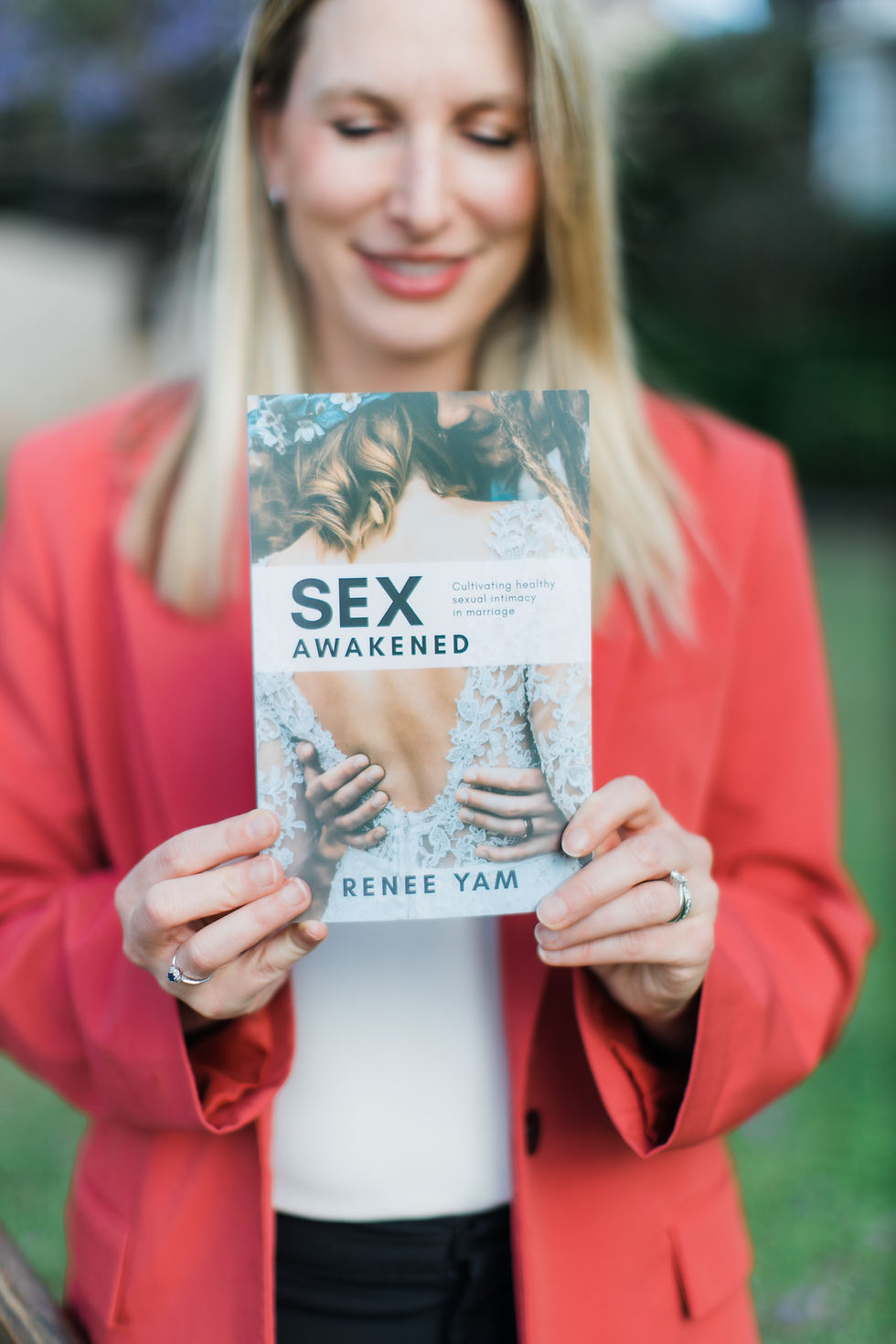
That's why I wrote my book Sex Awakened for engaged and newly wed couples to learn how to cultivate healthy sexual intimacy in marriage.
A Better Way to Think About Vaginismus
If intercourse isn’t possible right now, that does not mean sexual intimacy is impossible.
A woman with vaginismus can still experience:
Arousal
Pleasure
Even orgasm
Penis-in-vagina intercourse is one expression of intimacy. It is not the entire definition of it.
When the pressure shifts away from “this has to work,” the body often softens.
Safety first.
Connection first.
Curiosity first.
Healing rarely happens under pressure.
What Healing Often Looks Like
Because vaginismus is multifactorial, meaning it involves physical, emotional, relational, and sometimes spiritual layers, treatment is usually multidisciplinary.
That might include:
A gynaecologist to gently rule out medical factors
A pelvic health physiotherapist to work with pelvic floor muscles
A psychologist or sexologist to explore fear, trauma, shame, sexual beliefs and the emotional meaning sex carries for you.
Couples counselling or psychosexual therapy for safe and honest communication, reduce pressure, build confidence and equip both partners with practical sex and relational education and skills
Education is powerful here.
Understanding your anatomy.
Understanding your nervous system.
Understanding healthy sexual intimacy and working together as a team.
Foreplay and slowing down matters.
So does expanding your definition of sex:
Touching
Kissing
Manual stimulation
Mutual exploration
Emotional connection
Laughter
Patience
Intimacy is bigger than penetration.
Practical Shifts You Can Start With
If you or someone you love is navigating vaginismus, here are some starting points:
Name it without shame. Bringing language to the experience reduces isolation.
Stop forcing penetration. Repeated painful attempts reinforce the fear–pain cycle.
Prioritise safety over performance. The goal is not “making it work.” The goal is connection.
Get proper assessment. Pelvic health physios and trained sex therapists are invaluable.
Communicate openly. Suffering silently deepens resentment and distance.
Work as a team. This is not “her problem.” It’s something you navigate together.
Challenge shame-based beliefs. If you were taught sex is dirty or dangerous, your body may still believe that story. I have a whole module on this in my course Hello Liberty for women to develop a positive sexual mindset.
Be patient with the process. Becoming sexually confident takes time.
To the Husbands Reading This
Many men have never been educated about painful sex disorders in women.
If this is part of your story, your role is not to fix her. It is to stand with her and support her.
When you remove pressure…
When you express desire for her beyond penetration…
When you prioritise her comfort over your own timeline…
You create the safety that makes healing possible.
Your patience communicates love more loudly than any performance ever could.
There Is Light at the End
With the right support, many women with vaginismus go on to experience comfortable, enjoyable, deeply connected sexual intimacy.
This is not the end of your sexual story.
It may require:
Education
Therapy
Pelvic floor work
Gentle experimentation
Rewriting old narratives
But it is possible.
And you deserve more than silent suffering.

A Vision for Christian Marriages
Imagine a church culture where:
Women are not told to endure pain.
Couples are taught about anatomy and arousal before marriage.
Pleasure is not whispered about like a sin.
Bodies are honoured, not overridden.
Safety is prioritised over performance.
That’s the culture I want to help build.
Because God’s design for sex is good. It is relational. It is mutual. It is embodied. It is not grounded in fear.
If this resonates with you, please know: you are not alone.
There is support. There is hope. There is healing.
And there is something even better waiting on the other side of patience, education, and grace.
If you are experiencing painful intercourse or anxiety around intimacy, you can explore Christian sex therapy counselling here.


Comments